Backflow Testing

Tested every twelve months, by a licensed tester, filed with your water provider. We schedule it and fix what fails.

Why you got a letter

Your backflow assembly has an annual deadline

Every irrigation system connected to a public water supply has a backflow prevention assembly on it — the brass device near your meter. Its job is to make sure water that has been out in the yard can never be pulled back into the drinking supply.

Because it is a mechanical device with rubber in it, it wears out, and it fails without any outward sign. So Texas requires it to be tested when it is installed and, for systems classed as a health hazard, at least once every twelve months after that. The rules sit in the state’s public drinking water and irrigation regulations, but the deadline, the fee and the report form all come from your own city or water district — which is who sent you the notice.

The test itself has to be carried out by someone holding a TCEQ Backflow Prevention Assembly Tester licence. Many North Texas cities go further and require that tester to be registered with that specific city, filing results through the city’s own system.

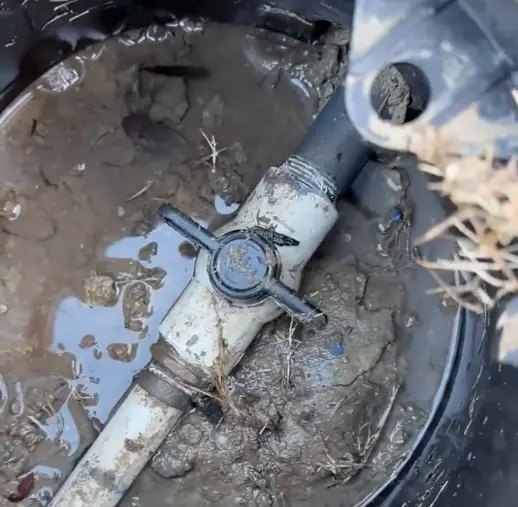
Brass backflow prevention assembly on an irrigation riser
Straight about who does what

How we handle this

Testing a backflow assembly is a separately licensed activity. We would rather tell you exactly where the line sits than be vague about it.

The test is done by a licensed tester

We schedule the annual test with a tester holding a current TCEQ Backflow Prevention Assembly Tester licence, registered where your city requires it. We do not perform the test ourselves and we do not pretend otherwise.

We manage it and do the system work

We are a TCEQ Licensed Irrigator, LI5654. We coordinate the visit, deal with the water provider’s paperwork, and carry out the irrigation work around it — isolation valves, the riser, replacing a cracked assembly, and any repair the test turns up.

One point of contact

You get one number to call and one thread to follow, rather than chasing a tester, a city inbox and an irrigation contractor separately. For a property manager with a portfolio, that is most of the value.

Start to finish

What happens after you send the form

1You tell us the address, the provider and the deadline

The deadline printed on your notice is the single most useful thing you can give us, because it decides how the visit gets scheduled. If you have mislaid the letter, tell us the city and we will work from that.

2We book a licensed tester for the property

Registered with your city where that is required — Fort Worth, Dallas and Frisco all maintain their own tester lists, and a tester registered in one is not automatically accepted in another.

3The assembly is isolated and gauged

A calibrated differential pressure gauge goes on the test cocks and every check valve, relief valve and air inlet is read against the thresholds for that assembly type. Irrigation is off only for the length of the test.

4The report is filed with your water provider

That filing is what actually closes out your notice, and it is the step people most often assume has happened when it has not. You get a copy for your own records.

5If it fails, you get a quote before anything is touched

Most failures are a worn rubber kit, a fouled check or a stuck relief valve rather than a dead assembly. You see the readings and a written price first. Once the repair or replacement is done, it is re-tested and the passing report is filed.

What is out there

Three assemblies you might have

You do not need to know which one is on your property — but if you can tell us, the right parts come out on the first trip.

PVB — pressure vacuum breaker

The tall brass bell on a riser, set above the highest sprinkler head. The most common assembly on North Texas residential irrigation, and the one most exposed to a hard freeze.

DCVA — double check valve assembly

A horizontal body with two shutoffs and four test cocks, often sitting in a below-grade box. Common where the system cannot be elevated above the heads.

RPZ — reduced pressure zone

Has a relief port underneath that discharges water when it trips. Required where a health hazard exists — most commercial sites, and any system injecting fertiliser or chemicals.

Local detail that catches people out

The rules are not the same across the Metroplex

Not sure who your water provider is?

Your city page lists it, along with that city’s watering rules and a link to its official page. Find your city →

Irrigation system components ahead of a North Texas freeze
The other reason assemblies fail

Most of the ones we replace were killed by a freeze

A backflow assembly is brass, it sits above ground, and it holds water. When that water freezes and expands, the body splits along a seam — and it will look completely normal until the system is pressurised again in spring, at which point it becomes a fountain.

If your system was not drained before the last hard freeze, a failed test in the spring is not a surprise. Two guides worth ten minutes: winterization, for shutting down properly before the cold, and after a hard freeze, for what to inspect and why you should open the main valve slowly.

Commercial & HOA

Portfolios and multi-assembly sites

Commercial properties and associations usually have several assemblies, sometimes across several addresses, each with its own deadline and its own filing. Handled one at a time that becomes a standing administrative job for somebody.

We route them as one scheduled block, keep the due dates on our side, and return a consolidated set of reports for the compliance file. If we already maintain the grounds, this folds into the same reporting you already get.

Grounds maintenance →
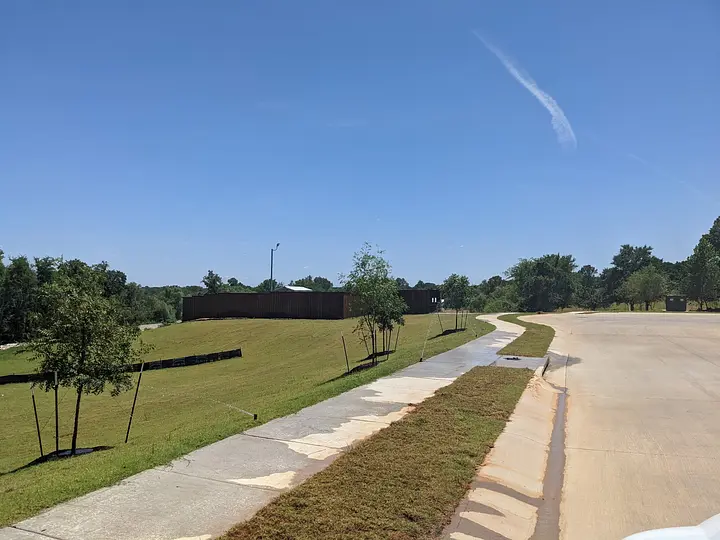
Commercial property landscape along a sidewalk

Deadline on the letter getting close?

Send it over and we will get a licensed tester booked for the property.

FAQs

Backflow testing questions

Do you test it yourselves?

No. Testing a backflow assembly requires a TCEQ Backflow Prevention Assembly Tester licence, which is separate from the Landscape Irrigator licence we hold. We schedule a licensed tester, handle the coordination and paperwork, and do the irrigation work around it.

Do I have to be home?

Usually not. The tester needs to reach the assembly and, on some systems, run a zone from the controller. If either is behind a locked gate, send us the gate code or an access note with your request.

How long is the water off?

Only for the test itself, commonly under half an hour for a single assembly. Normal operation is restored before anyone leaves.

What happens if it fails?

Nothing gets repaired without your approval. You get the failed readings and a written quote. Most failures are rebuilt with a kit rather than replaced. Once corrected it is re-tested and the passing report is filed with your provider.

Who files the report, me or you?

The tester files it with your water provider under their licence, and you get a copy by email. That filing is what closes out the notice — keeping the paperwork yourself does not.

My system is drained for winter. Can it still be tested?

The assembly has to be under pressure to test, so the water needs to be back on. Tell us the system is winterized when you send the request and the visit gets planned around charging the line.

What if I ignore the notice?

That is between you and your water provider, and it varies by city — second notices are normal, and some providers escalate to penalties or interruption of irrigation service. We would rather you booked it than found out which.

Let’s talk

Get an estimate

Tell us the service address, who supplies your water, and the deadline on your notice if you have it. We’ll come back with a date.

Prefer to talk? Call (972) 240-8082, Monday to Friday, 8:00 AM to 5:00 PM.