Texas Native & Water-Wise Landscaping

Beautiful and low-water are not opposites here — if the plants are chosen for this soil and this sun.

Yard Smarts guide

Water-wise does not mean gravel and cactus

The phrase puts people off, and it should. A yard of rock and three agaves is not what anybody wants to look at, and it is not what a low-water landscape has to be.

What actually reduces water use is far less visible: choosing plants adapted to blackland clay and North Texas heat, grouping them so the thirsty ones are not dragging the whole yard onto a heavy schedule, preparing the soil properly, and not irrigating turf nobody walks on.

Done that way, a water-wise landscape in this region is fuller than a conventional one, not sparser — because everything in it is somewhere it wants to be. And when the conservation stage tightens and everyone drops to two days a week, it barely notices.

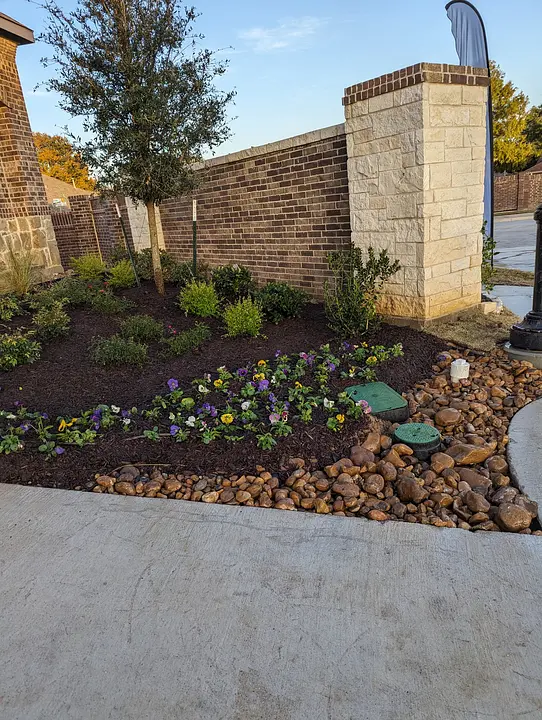
Mixed planting bed with flowering perennials against a brick wall
Design principles

Five decisions that do most of the work

1Group plants by how much water they want

Called hydrozoning, and it is the single biggest lever. One thirsty plant in a bed of tough ones forces the whole zone onto its schedule. Put the high-water plants together, near the house where you see them, and let the rest of the property run lean.

2Right plant, right place — light first

A west-facing bed against brick and the north side of the same house are different climates. Most plant failures here are a light problem being treated as a water problem. Watch where the sun actually falls across a day before choosing anything.

3Prepare the soil and mulch properly

Blackland clay is fertile but tight. Beds that get organic matter worked in and three inches of mulch on top hold moisture between waterings and stay cooler at root level. Mulch is not decoration here; it is part of the irrigation.

4Shrink the turf nobody uses

Turf is the thirstiest thing in most yards. Keeping it where children and dogs actually play, and converting the strips and corners nobody sets foot on into beds, cuts water without cutting anything you enjoy.

5Put beds on drip, not spray

Spraying a shrub bed wastes water to evaporation, wets foliage that would rather stay dry, and rots mulch. Drip puts water at the root where it is wanted, and lets the bed run on a completely different schedule from the lawn.

Plant palette

Natives and adapted plants that earn their place here

Not an exhaustive list — a starting palette of things we plant repeatedly because they work in this soil and this heat.

PlantLightWhy it works here
Trees
Cedar elmFull sunA true blackland prairie native. Handles our clay and, once established, our droughts. Clean yellow autumn colour.
Texas red oakFull sunThe reliable red autumn colour here, and far better suited to alkaline clay than the maples people keep trying.
Chinquapin oakFull sunBroad canopy, handles alkaline clay without the chlorosis that yellows other oaks.
Bur oakFull sunA large, long-lived shade tree and very drought tolerant once its roots are down.
Mexican plumSun to part shadeSmall tree, white flowers before the leaves in early spring, good wildlife value.
Texas redbudPart shadeMagenta spring bloom. The Texas form copes with our soil far better than the eastern one.
Desert willowFull sunLong bloom season through the heat, very low water, good in a hot west-facing spot.
Shrubs
Texas sage (cenizo)Full sunSilver foliage, purple flowers after rain. Wants sharp drainage — do not plant it in a low wet corner.
Flame acanthusFull sunBlooms right through the worst of August and pulls in hummingbirds.
AgaritaFull sunEvergreen, spiny, tough as anything, and berries for wildlife.
Dwarf yaupon hollySun to part shadeEvergreen structure that takes shearing, and one of the most adaptable natives we plant.
American beautyberryPart to full shadeBright purple berries in autumn. One of the best answers for planting under a tree.
Rusty blackhaw viburnumPart shadeNative understory small tree or large shrub with genuinely good autumn colour.
Perennials
Autumn sage (Salvia greggii)Full sunBlooms spring to frost on very little water. The workhorse of a North Texas bed.
Gregg’s mistflowerSun to part shadeCovered in butterflies in autumn. Spreads, so give it room.
Blackfoot daisyFull sunWhite flowers most of the year. Needs sharp drainage and dislikes being pampered.
Purple coneflowerFull sunPrairie native, long bloom, good for pollinators and seed-eating birds.
Turk’s capShadeOne of the few things that flowers reliably in real shade here.
Rock rose (Pavonia)Sun to part shadePink bloom all summer, shrugs off heat, reseeds gently.
Ornamental grasses
Little bluestemFull sunBlue-green through summer, copper through winter. The signature grass of this prairie.
Gulf muhlyFull sunA pink cloud in October that stops people in the street.
Lindheimer’s muhlyFull sunLarge silver-green fountain, good as a structural anchor in a bed.
Inland sea oatsShadeOne of very few grasses for dry shade, with seed heads that hold into winter.
Groundcovers
FrogfruitSun to part shadeTough, spreading, tiny white flowers, and it will take light foot traffic.
Silver ponyfootFull sunSilver trailing foliage on almost no water. Striking spilling over a wall or edge.
HorseherbShadeFills shady ground where grass has given up. Goes dormant in a hard freeze and comes back.
Light needs shift with how much reflected heat a spot gets. For a fuller regional list, the Texas SmartScape plant search is built specifically for North Central Texas.
Keeping it interesting

Something happening in every season

Spring

Mexican plum and Texas redbud flower before most things have leafed out. Coneflower and salvia start and do not really stop.

Summer

Flame acanthus, rock rose and autumn sage carry the heat months when a conventional bed is sulking. Muhly grasses build up.

Autumn

Gulf muhly turns pink, Gregg’s mistflower fills with butterflies, beautyberry goes purple, and cedar elm and Texas red oak colour up.

Winter

Little bluestem holds copper through the cold, evergreen yaupon and agarita keep structure, and seed heads feed birds instead of being tidied away.

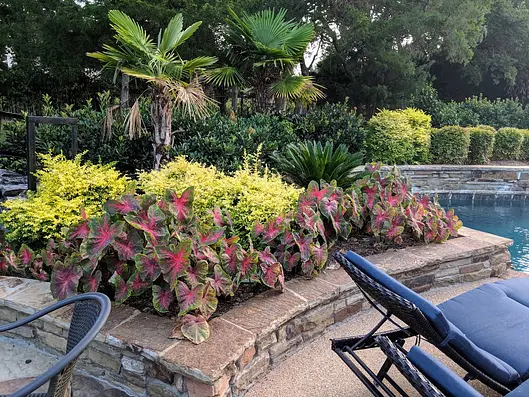
Layered planting with foliage and stone edging
Where people go wrong

Four avoidable mistakes

  • Planting natives and then watering them like annuals. Most need real water for the first season to establish, then far less. Keeping them on a summer lawn schedule afterwards is how a drought-tolerant plant drowns.
  • Sharp-drainage plants in a low spot. Cenizo, blackfoot daisy and salvias want to dry out between drinks. In a corner that holds water after every storm, they rot.
  • Buying by the flower, not the site. The plant that looked incredible at the nursery in April was grown in a shade house. Match it to your light first.
  • Mulching too thin or piling it on trunks. Three inches over the bed, and pulled back off the stems. Mulch volcanoes around trees kill them slowly.
Have us design it

Want a yard that looks good on two days a week?

We design and install water-wise landscapes across North Texas — and you do not have to convert the whole property at once.

FAQs

Native and water-wise questions

Do native plants really need less water?

After they are established, yes — substantially. The first season is the exception: everything needs regular water to get its roots down, natives included. The saving comes in years two onward, and it compounds when the beds are on drip and grouped sensibly.

Will it look wild or unkempt?

Only if it is designed that way. Native plants can be used in perfectly formal beds with clean edges and evergreen structure. The plants are native; the layout is whatever you want it to be.

Do I have to redo the whole yard?

No, and most people should not. Converting one area — usually the hottest, hardest strip where nothing has ever thrived — is the sensible first move. It also lets you see whether you like the look before committing.

What about my HOA?

Tell us the guidelines and we will design within them. A well-structured native bed with defined edges and evergreen bones satisfies most HOA standards; what tends to get letters is bare ground and unedged beds, not the plant list.

Are these plants good for pollinators?

Very. Coneflower, mistflower, salvia, flame acanthus and the muhly grasses in this palette are among the better things you can plant here for bees, butterflies and hummingbirds — a genuine side benefit rather than the reason to do it.

Can you keep some lawn?

Of course. Most of the work we do is a mix: real turf where the family uses it, beds where they do not, and sometimes synthetic turf in the shade where grass was never going to win.

Let’s talk

Get an estimate

Tell us about the property and which areas are giving you trouble. We’ll follow up to arrange a walk-through.

Prefer to talk? Call (972) 240-8082, Monday to Friday, 8:00 AM to 5:00 PM.