The DFW Watering Guide

What the rules actually are, city by city — and how to get more out of the days you are allowed.

Start here

How watering rules work in North Texas

Almost every city we serve buys its water wholesale from the North Texas Municipal Water District. NTMWD sets the conservation stage based on reservoir conditions and demand; each city then sets and enforces its own watering-day schedule on top of that.

Which means there is no single DFW watering schedule, and the rules where you live may not match the rules where you work. Moving one city over can change your allowed days entirely.

Two things are close to universal in this region, though. Most cities cap outdoor watering at two days a week, and most prohibit watering during the hottest part of the day — commonly between 10 a.m. and 6 p.m. through the warm months. Restrictions tighten as the conservation stage rises.

Check before you set the controller.

Rules change with lake levels and with the season. The table below links straight to each city’s own page — that is the authority, not us.

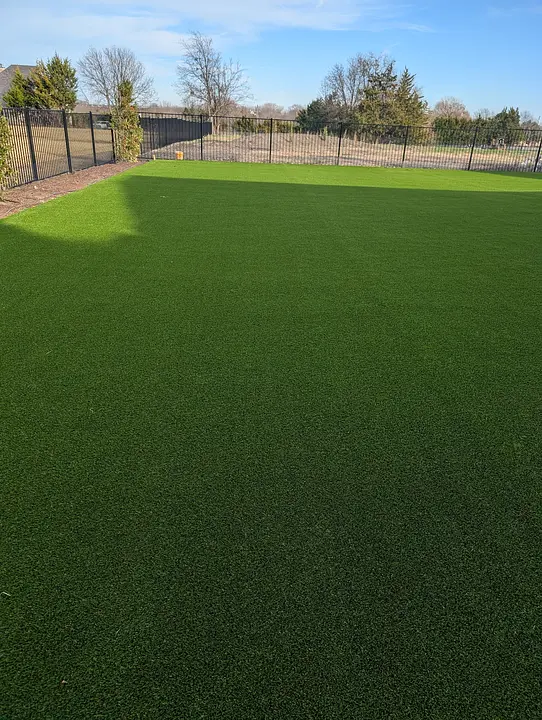
A healthy North Texas lawn
By city

Watering rules where you live

Most cities publish their own schedule and conservation stage, and the links below go to the official page. A few of the smaller water suppliers publish nothing — where that is the case we say so rather than guess.

CityCountyOfficial watering & conservation page
RockwallRockwall CountyCity of Rockwall Utility Billing
HeathRockwall CountyCity of Heath “Water Wise”
Royse CityRockwall CountyRoyse City Utility / Water Department
FateRockwall CountyCity of Fate Water Conservation
RowlettDallas CountyCity of Rowlett Seasonal Watering
GarlandDallas CountyCity of Garland Drinking Water
SachseDallas & Collin CountiesCity of Sachse Water Restrictions
WylieCollin CountyCity of Wylie Public Works – Water
MurphyCollin CountyCity of Murphy
ForneyKaufman CountyCity of Forney Water Information
McKinneyCollin CountyCity of McKinney Outdoor Water Use
FriscoCollin and Denton CountiesCity of Frisco Water Efficiency Plan
PlanoCollin and Denton CountiesCity of Plano Watering Guidelines
AllenCollin CountyCity of Allen “Find My Watering Day”
RichardsonDallas and Collin CountiesCity of Richardson Water Conservation
FairviewCollin CountyTown of Fairview water conservation ordinance
DentonDenton CountyCity of Denton Drought Contingency & Water Conservation
Little ElmDenton CountyCheck current restrictions with the Town of Little Elm
CarrolltonDallas, Denton and Collin CountiesCity of Carrollton Watering Rules and Restrictions
Fort WorthTarrant CountyCity of Fort Worth year-round watering requirements
EulessTarrant CountyCity of Euless Water Conservation
ArlingtonTarrant CountyCity of Arlington water and sewer ordinance (PDF)
DallasDallas CountyDallas Water Utilities conservation ordinance
TerrellKaufman CountyCity of Terrell Water Conservation Plan
CrandallKaufman CountyCity of Crandall Water Department
TylerSmith CountyTyler Water Utilities
NevadaCollin CountyNevada Special Utility District
JosephineCollin and Hunt CountiesCity of Josephine Utility Department
Caddo MillsHunt CountyCity of Caddo Mills Water & Utility Billing
City pages are maintained by each city and change with conditions. If your city is not listed, check your utility bill or your city’s public works page.
Through the year

A North Texas watering calendar

A starting point for an established lawn on clay soil. Your allowed days always win over this table — and so does the rain.

Time of yearTypical frequencyWhat matters
December – FebruaryUsually noneCool-season dormancy. Water only during a long warm dry spell, and only when temperatures are above freezing. Systems should be winterized.
MarchAbout every 7–10 daysTurf is waking up. Start light. Most March watering in North Texas is unnecessary because of spring rainfall.
April – MayOnce, sometimes twice a weekGrowth is fastest now and so is rainfall. Let the rain sensor do its job rather than running a fixed schedule.
June – AugustTwice a week — the usual legal maximumPeak demand. Aim for roughly one inch total per week including rainfall, split across your two allowed days, and split each day into cycles.
SeptemberTwice a week, easing to onceHeat backs off through the month. Cutting to one day in late September is usually enough.
OctoberAbout once a weekCooling down. This is when most people are still running summer times and paying for it.
NovemberEvery 10–14 days, then stopTaper off and book winterization before the first hard freeze.
Guidance for established warm-season turf in the Dallas–Fort Worth area. New sod, new landscape and shaded or sloped areas all need different treatment.
Getting more out of the water you are allowed

Four things that beat adding minutes

1Cycle and soak

Blackland clay takes water in far more slowly than a sprinkler puts it out. A single long run mostly waters the street. Split the same total time into two or three short cycles with a gap between them, and the water actually goes into the ground.

2Measure what you are actually putting down

Put a few straight-sided cans — a tuna tin is the classic — around a zone and run it for fifteen minutes. Measure the depth, and you know how long that zone needs to deliver a given amount. Zones almost never match each other.

3Check the rain and freeze shut-off

Texas irrigation rules require new systems to have a rain or moisture shut-off device. Plenty of older systems have one that stopped working years ago, so the system waters cheerfully through a thunderstorm. It is a five-minute check.

4Get beds off the turf zones

Shrubs and turf want completely different amounts of water on completely different schedules. Converting beds to drip is usually the single largest reduction available on an older system, and the plants do better for it.

Suspect a leak?

Turn off everything in the house that uses water, read the meter, wait two hours with nothing running, and read it again. If it moved, you have a leak on your side of the meter — and an irrigation mainline is one of the most common places for it to be. Send us a repair request and we will find it.

FAQs

Watering questions we get asked

How much water does a North Texas lawn actually need?

In midsummer, roughly one inch a week including rainfall. In spring and autumn, considerably less than most controllers are set to deliver. From December through February, an established lawn here generally needs none at all.

Is it better to water in the morning or the evening?

Early morning. Wind and evaporation are lowest, pressure is usually best, and the grass blades dry as the sun comes up. Evening watering leaves foliage wet overnight, which invites fungal problems.

My lawn has dry stripes even though the zone runs. Why?

Almost always coverage rather than duration — mismatched nozzles, worn heads, wrong spacing or low pressure. Adding minutes floods the healthy part of the lawn and still will not fix the stripe.

When should I winterize?

Before the first hard freeze — typically late November into December in this region, but the weather does not read calendars. Our winterization guide walks through the steps.

Can I water on a day that is not my assigned day?

Hand watering and drip are treated differently from automatic sprinklers in most city ordinances, and new sod and new landscape often qualify for a temporary variance. Check your city’s page — the links are in the table above.

System not doing what the controller says?

We diagnose coverage, pressure, valves and controllers across North Texas.

Let’s talk

Get an estimate

Tell us what the system is doing and where you are. We’ll follow up to discuss next steps.

Prefer to talk? Call (972) 240-8082, Monday to Friday, 8:00 AM to 5:00 PM.